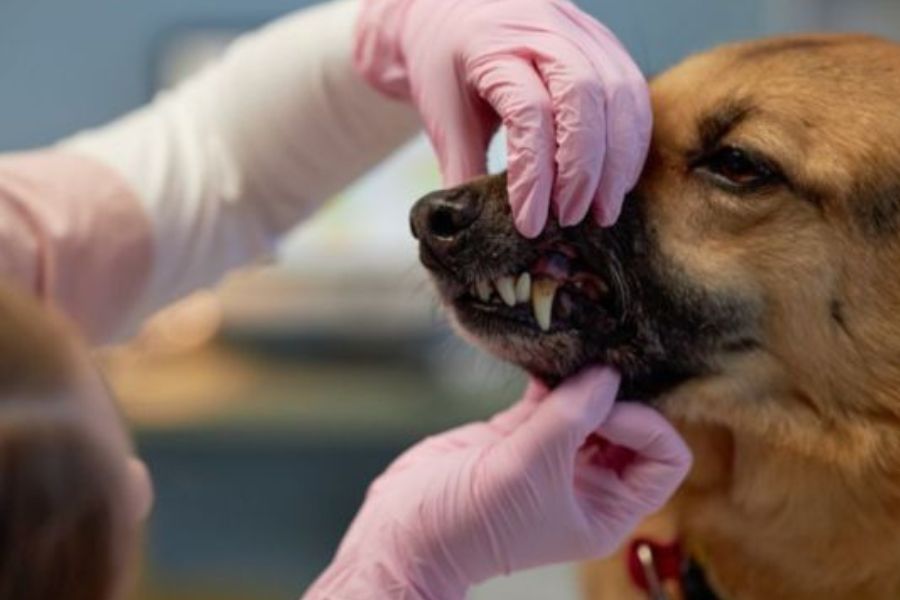
Dental disease can begin quietly and become painful before a dog or cat shows obvious discomfort. Plaque hardens into tartar, gums become inflamed, infection can develop around teeth, and advanced disease can damage the tissues supporting teeth.
Understanding each stage helps owners recognize changes, know when professional care is needed, and build habits that protect oral health. This guide covers stages, warning signs, treatment, prevention, and questions.
Why Dental Disease Matters
Dogs and cats use their mouths for eating, grooming, playing, and communication. Bad breath is often an early clue, not simply a normal part of having a pet.
Plaque contains bacteria. Saliva can harden lingering plaque into tartar. Tartar creates rough surfaces where bacteria collect. Gum inflammation can follow. Untreated periodontal disease may progress beneath the gumline, where owners cannot see the damage.
Regular pet dental services can identify changes early.
The 4 Stages of Dental Disease
Stage 1: Gingivitis
Stage 1 is the earliest recognizable stage. Plaque builds along the gumline, causing redness, swelling, or bleeding.
This stage can often be managed before permanent damage occurs. Professional cleaning removes plaque and tartar, while home care limits new buildup. A pet may still eat normally, making this stage easy to overlook.
Stage 2: Early Periodontitis
The disease has moved beyond simple gum irritation. Bacteria and inflammation begin affecting tissues around the teeth. Gum pockets can form, allowing bacteria below the gumline.
Signs include bad breath, red gums, tartar, chewing changes, or pawing at the mouth. Cleaning matters because brushing cannot remove hardened tartar. Dental X-rays may evaluate hidden areas.
Stage 3: Moderate Periodontitis
Stage 3 involves more serious damage to structures that hold teeth in place. Bone loss and gum recession can occur. Some pets develop loose teeth or noticeable pain.
Eating patterns can change. A dog may chew on one side, drop food, prefer soft food, or hesitate before eating. Cats may swallow food without chewing or leave meals unfinished.
Treatment depends on disease severity. Cleaning, X-rays, medication, or extraction may be recommended.
Stage 4: Advanced Periodontitis
Stage 4 represents severe dental disease. Extensive tartar, gum recession, infection, loose teeth, and bone loss may be present. Some teeth may no longer be salvageable.
Pets can hide oral pain. Continued eating does not necessarily mean a healthy mouth. Facial swelling, bleeding, discharge, severe breath odor, reduced appetite, or behavior changes deserve prompt attention.
Treatment may involve extractions and pain management. X-rays reveal hidden damage.
Common Signs of Dental Disease
Watch for these signs:
• Persistent bad breath
• Yellow or brown tartar
• Red, swollen, or bleeding gums
• Dropping food while eating
• Different chewing habits
• Reduced appetite
• Excessive drooling
• Pawing at the mouth
• Loose or missing teeth
• Facial swelling
Normal appetite does not rule out dental disease. Cats can conceal discomfort, so subtle behavior changes matter.
How Dental Disease Is Diagnosed
A dental check begins with an examination of the mouth and gums. A complete assessment may require anesthesia because problems can sit below the gumline. Dental X-rays can show bone loss, damaged roots, and hidden concerns.
Professional cleaning removes plaque and tartar. Polishing smooths enamel. A severely damaged tooth may require extraction.
For pets needing dental care, professional pet dental cleaning can be an important part of protecting long-term oral health.
Preventing Dental Disease at Home
Daily dental care supports healthier mouths. Brushing with pet-safe toothpaste is one of the most effective home habits. Introduce brushing gradually and reward calm cooperation.
Dental diets, approved chews, and plaque-control products may support home care. They should complement professional examinations. Human toothpaste should never be used for pets because some ingredients can be harmful.
Wellness visits help monitor plaque, tartar, gum health, and eating changes.
When Should a Pet See a Veterinarian?
Schedule an oral examination when bad breath persists, tartar is visible, gums bleed, chewing changes, or your pet shows mouth-related discomfort. Urgent attention is needed for facial swelling, significant bleeding, inability to eat, severe pain, or sudden behavior changes.
Early attention can mean simpler treatment and better comfort. Waiting for obvious pain can allow hidden disease to progress.
Conclusion
Dental disease develops gradually, but its effects can become significant. Stage 1 may involve gum inflammation. Later stages can damage bone, loosen teeth, and cause discomfort. Regular examinations, professional cleaning, dental X-rays when indicated, and home care support prevention.
If your pet has persistent bad breath, tartar, red gums, or eating changes, schedule an oral examination. Book an appointment to discuss your pet’s dental health and create a practical care plan.
Frequently Asked Questions(FAQs):
1. What is the first stage of dental disease in dogs and cats?
A: The first stage is gingivitis, marked by red, swollen, or bleeding gums caused by plaque. At this point, damage may be reversible with professional cleaning and consistent home dental care at home.
2. How quickly does dental disease progress in pets?
A: Progress varies with age, genetics, diet, oral anatomy, and home care. Some pets develop significant tartar and gum disease quickly, while others progress more slowly. Regular examinations help identify changes early in pets.
3. Can dental disease hurt dogs and cats?
A: Yes. Dental disease can cause gum inflammation, tooth damage, infection, and pain. Pets often hide discomfort, so continued eating does not prove that the mouth is healthy or pain-free.
4. Is bad breath normal for dogs and cats?
A: Persistent bad breath is not something owners should consider normal in pets. It can indicate plaque, tartar, gum inflammation, infection, or another oral problem that deserves a timely professional examination.
5. Can brushing prevent dental disease in pets?
A: Regular brushing can reduce plaque buildup and support healthier gums. Use toothpaste made for pets, introduce brushing gradually, and combine home care with routine professional examinations at home when possible.
6. When does a pet need a professional dental cleaning?
A: A professional cleaning may be recommended when tartar, gum inflammation, bad breath, or periodontal disease is present. Your veterinarian can assess your pet’s mouth and determine appropriate cleaning and treatment needs.